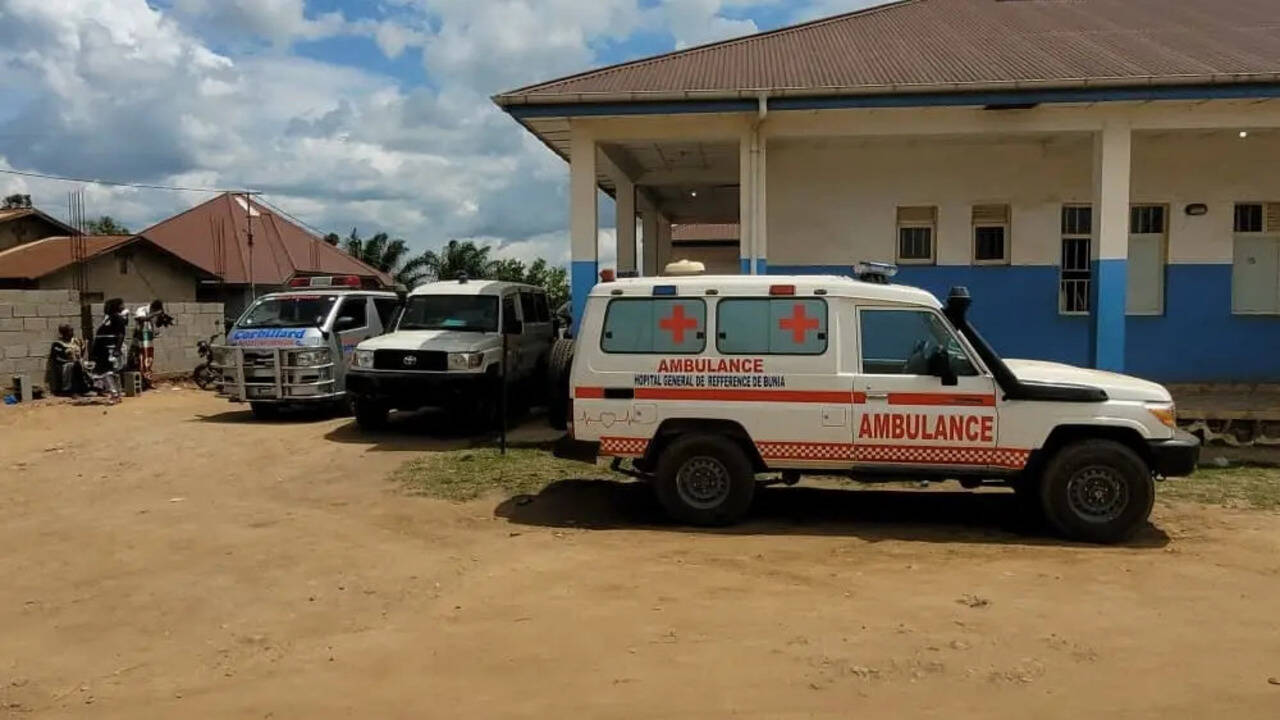
EBOLA AND HANTAVIRUS OUTBREAKS PROMPT AFRICAN GOVERNMENTS TO PURSUE HEALTH SOVEREIGNTY
HARARE, Zimbabwe (AP) — A recent Ebola outbreak in the Democratic Republic of Congo and Uganda has intensified discussions among African governments about achieving health sovereignty. This shift comes as international donor support, particularly from the United States, has significantly declined, with funding halved over the past five years.
This reduction in assistance, exacerbated by cuts during the Trump administration, coincides with Africa's rapidly growing population, which exceeds 1.5 billion. The current Ebola strain lacks approved treatments or vaccines, heightening concerns following a rare hantavirus outbreak aboard a cruise ship.
Urgent Need for Self-Reliance
Dr. Jean Kaseya, director-general of the Africa Centers for Disease Control and Prevention, emphasized that Africa faces a critical funding crisis. In a recent initiative aimed at promoting self-reliance in health financing, he noted, “Every time we have an outbreak, many countries start to ask for partners because they don’t have in their budgets funding to respond, even to prepare for these outbreaks.”Despite this, African nations are increasingly aware that reliance on external aid must be reduced. The Africa CDC reports that official development assistance has plummeted from approximately $26 billion in 2021 to about $13 billion projected for 2025, as wealthier nations shift focus to other geopolitical concerns.
Commitments to Health Funding
Although African leaders have pledged for years to enhance domestic health funding, these commitments have largely remained unfulfilled. In 2001, nations agreed to allocate at least 15% of their national budgets to health, yet only Rwanda, Botswana, and Cape Verde are making significant progress among Africa's 54 countries.Dr. Alex Ajangba, a health financing expert, remarked, “The conversation was somehow theoretical because the donor system was still functioning. But now that cushion is gone.” He further asserted, “What we are seeing here is not a temporary dip of donor funding that we will recover from.”
Advancing Health Sovereignty
In response to these challenges, African governments are increasingly prioritizing health sovereignty, aiming to develop and finance their health systems with less dependency on foreign aid. Initiatives like Ghana’s “Accra Reset,” launched in September, and the Africa Health Security and Sovereignty Agenda, adopted earlier this year, seek to enhance resilience in health systems.Proposed domestic solutions include implementing higher taxes on tobacco, alcohol, and sugary foods, consolidating medicine procurement to reduce costs, expanding local pharmaceutical manufacturing, and addressing inefficiencies within health systems.
Resource Wealth and Financial Losses
Experts highlight that Africa is rich in natural resources, holding approximately 30% of the world’s mineral reserves. However, much of this wealth is lost due to poor contracts, illicit financial flows, and minimal local processing of raw materials. The continent loses an estimated $40 billion annually to such illicit financial activities, according to the United Nations Economic Commission for Africa.To combat these challenges, African nations are also focusing on co-financing strategies that necessitate greater domestic contributions alongside donor support. Gavi, the global vaccine alliance, noted that lower-income countries contributed a record $302 million toward vaccines in 2025, totaling about $1 billion over the past five years.
Contentious Shift in Aid Dynamics
The shift towards self-reliance is not without contention. The Trump administration promoted co-financing as a condition for health agreements with nearly two dozen African nations, requiring countries to increase domestic health spending within a set timeframe or risk losing aid.Some nations have pushed back against these proposals, citing concerns over U.S. demands for sharing health data without guaranteed benefits. Critics argue that the conditions placed on aid may impose unrealistic pressures on already struggling economies.
Asia Russell, executive director of Health GAP, expressed concern, stating, “They are being set up to fail.” She highlighted the seriousness of the ultimatum posed by the U.S. regarding resource allocation based on specific performance metrics.
Debt Burdens Affecting Health Expenditure
Many African nations are grappling with substantial debt burdens, with approximately 40% spending more on debt than on health. Jen Kates, a senior vice president at the nonprofit KFF, noted that the escalating debt crisis significantly affects public health outcomes.According to the African Export-Import Bank, Africa’s debt has reached around $1.2 trillion, forcing governments to make difficult trade-offs, with debt servicing consuming about 19% of government revenue in sub-Saharan Africa, as reported by the United Nations.
Stay updated with the latest and breaking news on Times Now. Get latest India News, World News, Business News, Sports News, Viral News and Education News also explore Entertainment News and Lifestyle Tips.
2026-05-18T14:25:02Z